Choosing the correct size solar generator begins with determining how much electricity your gadgets use and how long they must operate. Whether you’re planning an emergency, a camping vacation, or an off-grid life, properly sizing your generator guarantees you keep powered without overpaying. Too tiny, and it will not meet your demands. Too big, and you’ll spend money on unneeded space. This tutorial delves into crucial size criteria such as wattage, usage duration, and device type to help you find the best fit. You’ll also see real-life examples, ranging from vacation to whole-home backup, to help you buy with confidence and avoid frequent beginner mistakes.
What Determines the Right Solar Generator Size?
Understanding Watts, Watt-Hours, and Surge Power
Watts (W) and watt-hours (Wh) are used to grade solar generators based on how much electricity they produce and how long they can operate. Watts represent the rate of energy consumption, such as how many devices may be supported at the same time, but watt-hours represent overall capacity, or how long such devices will operate. Surge power is also important; it is the quick burst of extra power that some appliances, such as refrigerators or microwaves, require when starting up. Always verify the continuous and peak output ratings. If a generator has 1,000W continuous and 2,000W surge power, it can withstand transient surges without shutting down, maintaining consistent operation.
Listing Essential Devices and Daily Power Usage
Begin by noting the wattage of each critical device—phones, lights, computers, routers, and refrigerators—and estimating how many hours each day you’ll use them. To calculate your daily watt-hour requirements, multiply the wattage of each gadget by its usage time. For example, a 60W fan that runs for 5 hours consumes 300Wh. Add the totals for all devices to determine how much energy your generator needs to store and provide on a daily basis. Do not forget to account for gadgets that turn on and off. This list provides a comprehensive view of your daily load and avoids underestimating power requirements, which is the most common reason solar generators fail.
See also: Techsslaash Com: Exploring the Latest Trends in Technology
How Usage Time and Backup Duration Change the Size Needs
The duration of your backup power requirements has a considerable influence on generator size. A generator that powers gadgets for two hours requires far less electricity than one that operates them overnight or for several days. A 300-500Wh battery pack may be sufficient for short-term use. For lengthy outages or off-grid stays, aim for 1,500Wh or more, particularly if sunshine is scarce. Consider how many times per day you’ll charge or use high-wattage devices. More frequent usage results in quicker depletion, necessitating higher capacity or faster solar charging. A longer backup endurance also requires greater solar input to recover power in time for the next usage cycle.
What Size Solar Generator Fits Your Use Case?
Small Solar Generators for Camping and Light Travel
Small solar generators, usually with 200–500Wh of power and 150–300W of output, are great for charging phones, tablets, cameras, and powering LED lights or small fans when camping. These units are small, usually less than 15 pounds, and convenient to take for treks or weekend getaways. They have USB connections, a few AC outlets, and can work with modest solar panels like 60–100W folding kits. Most of them can be charged in a day of bright sunshine, making them great for anyone who requires a portable power source and doesn’t need a lot of power. They won’t power appliances or medical equipment, but they will provide you with peace of mind on short excursions where being connected, illuminated, and comfortable is most important.
Medium Solar Generators for Home Backup Essentials
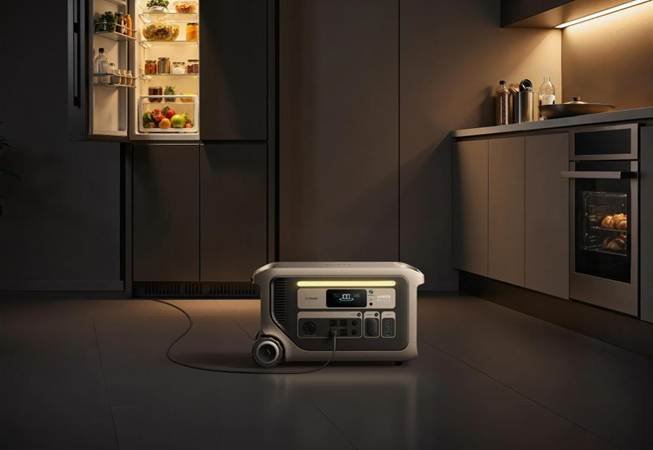
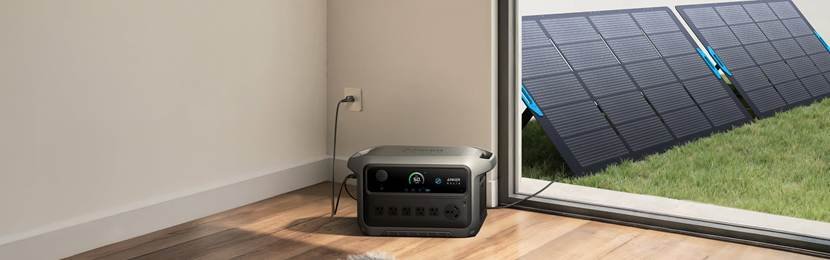
Medium-sized solar generators with outputs between 1,000 and 1,500 watts and 1,000 and 2,000 watt-hours can keep vital things running during power shortages. These can power fridges, Wi-Fi routers, computers, phones, LED lights, and CPAP machines for a few hours to a whole day, depending on how much power they need. They are heavier and harder to move than tiny units, but most homes can still handle them. When you use 200–400W solar panels, you may fully charge them in a day. Most of these generators have more than one AC outlet, USB-C port, and app-based monitoring to help you manage your energy use better. They are a good choice for people who live in the suburbs and want short-term home resilience without having to build permanent systems, since they balance mobility with power.
Large Solar Generators for RVs and Whole-Home Support
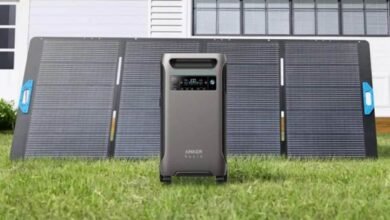
Large solar generators with capacity greater than 2,000Wh and outputs greater than 2,000W are designed for RV applications, off-grid cottages, or limited whole-home support. They can power refrigerators, microwaves, power tools, and even certain air conditioners if properly scaled. These devices often weigh 50 pounds or more and are combined with high-output solar arrays (400W or more) for dependable recharging. Features include several AC connectors, high surge ratings, 30A RV plugs, and battery expansion choices. While not as portable, they provide ample power for extended journeys or crucial backup. Calculate your complete daily energy load for full-home use, and then choose a generator and solar panel system that can meet or surpass it.
Conclusion
Choosing the appropriate size solar generator is determined by what you need to power, how long you need it to run, and how frequently you use it. Smaller units are ideal for campers and single travelers who need to charge their equipment. Medium sizes are ideal for keeping basics operational during short-term outages. When full-day coverage is required, larger systems may accommodate RVs or residences. Understanding watts, watt-hours, and actual use helps to avoid overloading or running out. Write down your gadgets, calculate your load, and select a generator that meets both your power and recharge requirements. With the right match, a solar generator becomes a reliable, clean energy solution you can trust when the grid goes down.